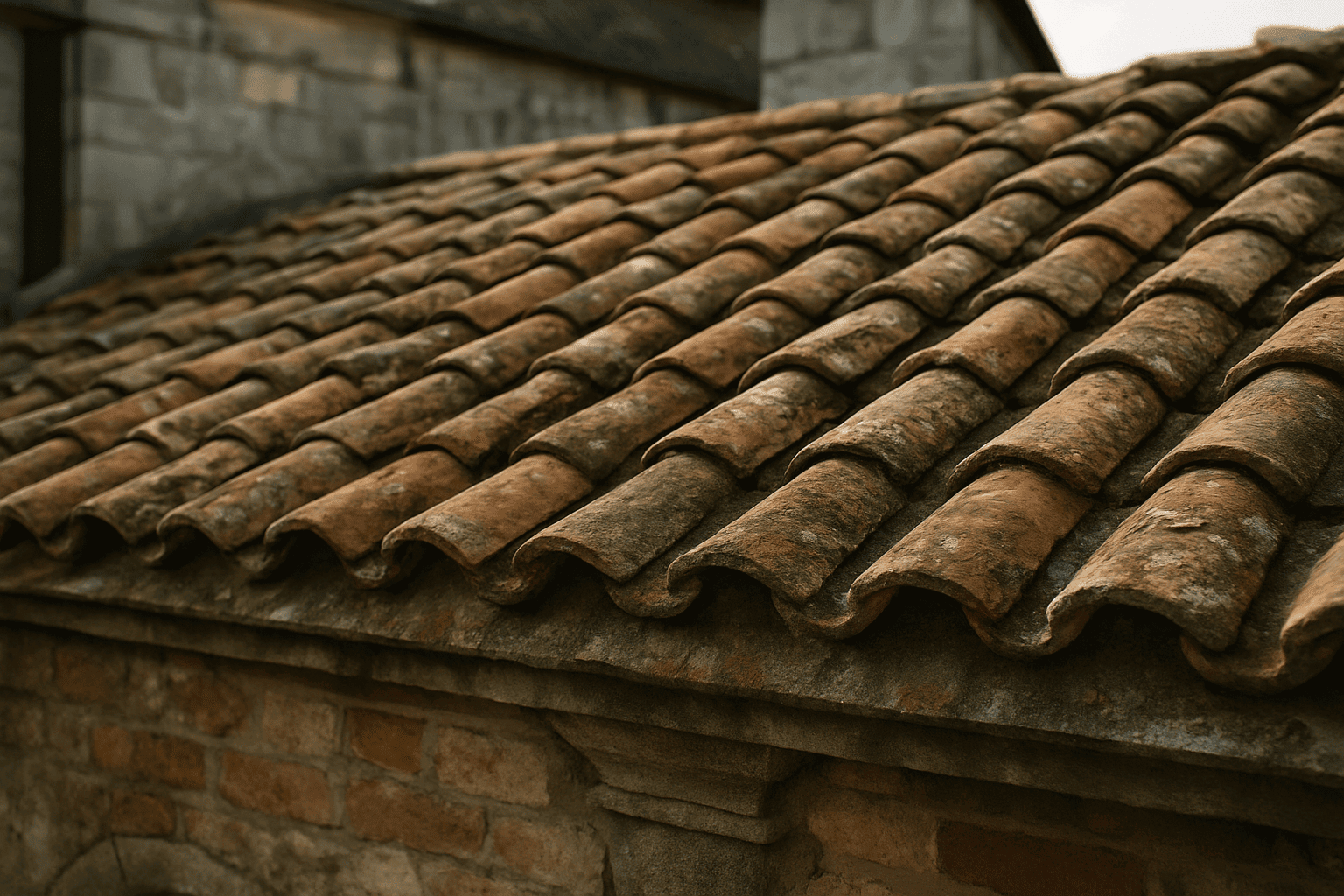
Your guide to choosing the right clay tile profile for your roof
When it comes to clay roof tiles, two of the most common profiles you’ll come across are Pan & Cover (also known as Mission or barrel tiles) and Interlocking tiles. Both deliver the timeless beauty and durability of fired clay, yet they differ in installation, performance, cost, and visual impact.
Whether you’re restoring a heritage home or building something new, understanding these differences will help you choose the right tile for your project.
What Are Pan & Cover (Mission) Tiles?
The Pan & Cover profile is a classic two-piece system:
- The pan (concave tile) channels rainwater safely down the roof.
- The cover (convex tile) overlaps each joint, shedding water and snow effectively.
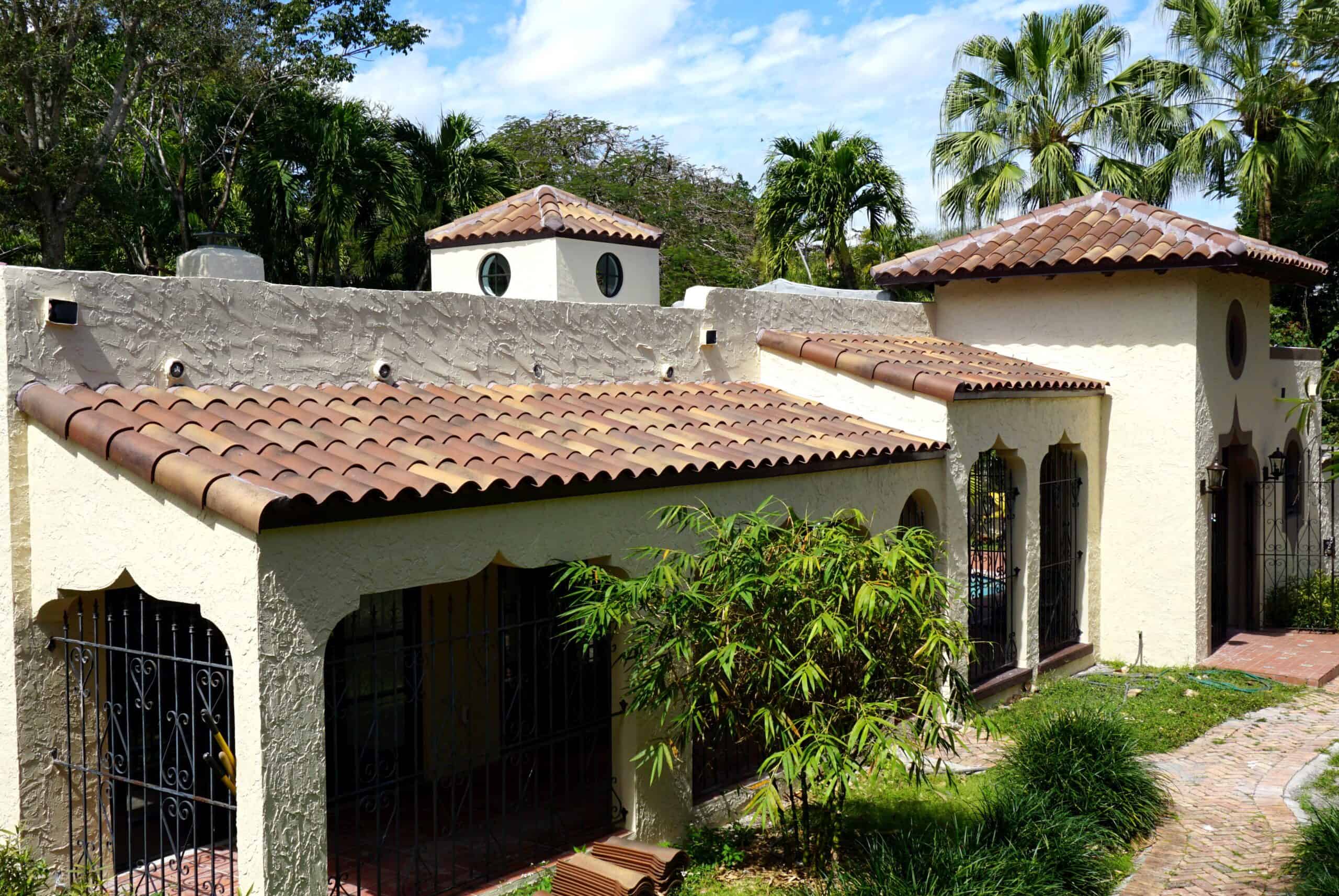
Used for centuries across Europe and the Mediterranean, Mission tiles are prized for their deep curves, bold shadows, and authentic handmade character. The alternating pattern creates rhythm and movement along the roofline, adding warmth and architectural depth. The open channels between each pan can also help with airflow and moisture regulation in certain climates.
Strengths of Pan & Cover Tiles
- Authentic, historic appearance with strong shadow definition
- Proven weather resistance in high-rain and snow-load areas
- Excellent performance on steep slopes and heritage projects
- Long lifespan with minimal maintenance
Considerations
- Higher labor cost due to precise placement
- More pieces per square than interlocking tiles
- Requires experienced installers for consistent coverage
What Are Interlocking Tiles?
Interlocking clay tiles are single-piece tiles engineered with precision grooves or ribs that fit together like puzzle pieces. These built-in overlaps form a tight, weathertight seal, keeping out rain, snow, and wind uplift — ideal for modern construction and efficiency-focused projects.
Because each tile locks into the next, installation is faster and more predictable, requiring fewer tiles per square. The finished surface is smoother and more uniform, yet still offers the natural colour variation and durability of true clay.
Strengths of Interlocking Tiles
- Faster installation with lower labor cost
- Built-in wind and snow resistance from interlocking edges
- Tight seal minimizes water penetration and uplift
- Lighter overall weight per square
- Suitable for both steep and moderate roof pitches
Considerations
- Less visual depth than traditional Mission tiles
- Some profiles may not suit historical restoration work
Pan & Cover vs. Interlocking: A Quick Comparison
| Feature | Pan & Cover (Mission) | Interlocking Tiles |
|---|---|---|
| Tile Pieces | Two separate tiles (pan + cover) | Single interlocking tile |
| Weather Protection | Excellent – dual overlap deflects wind-driven rain and snow | Excellent – tight interlock seals against weather |
| Installation | Complex, requires skilled layout | Faster, simpler, cost-efficient |
| Material Use | More tiles per area | Fewer tiles, less overlap |
| Aesthetic | Traditional, high shadow relief | Clean, uniform, modern or traditional look |
| Cost | Higher labor cost | Lower installation cost |
| Roof Slope | Best on medium to steep slopes | Works on a wide range of slopes |
| Historical Authenticity | Ideal for restorations | Ideal for contemporary roofs |